


The Story Of Astronomy
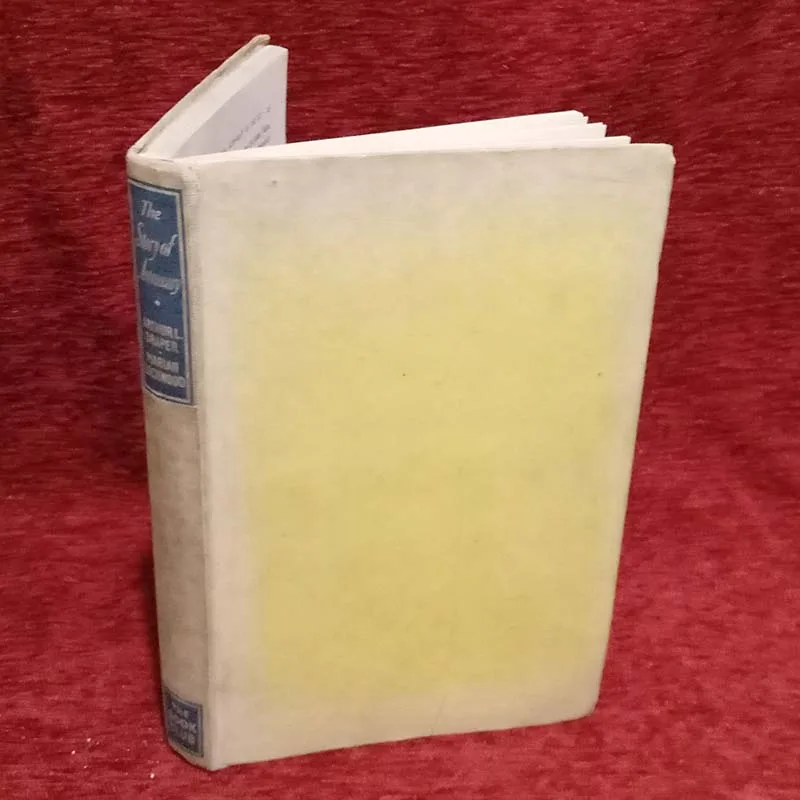
Publisher: The Scientific Book Club
Format: Hardback
ISBN: none
The Story of Astronomy (1941)
By Arthur L. Draper & Marian Lockwood | The Scientific Book Club
ISBN: none (published in an age before numbers ruled everything)
Condition: Fair (a bit faded, still intellectually luminous)
Offered by: Crappy Old Books
This is The Story of Astronomy, printed in 1941, when:
-
The Second World War was very much in progress
-
Rockets were still mostly things that exploded in the wrong direction
-
And “space travel” lived primarily in pulp magazines and the heads of ambitious physicists.
Into this steps Arthur L. Draper and Marian Lockwood, here to tell you how humanity went from “Ooh, look at that bright dot” to actual science, armed with nothing but telescopes, trigonometry and stubborn curiosity.
What’s inside (besides starlight and slightly browned paper)
You’re getting a proper pre-space-age grand tour of astronomy:
-
Ancient sky-watchers – Babylonian, Greek, Arab and assorted wise people looking up and saying “Those aren’t random.”
-
Copernicus, Galileo, Kepler et al. – the brave souls who gently pointed out that the Earth is not, in fact, the main character.
-
Newton and gravitational enlightenment – apples, orbits, and the dawning horror that the maths is going to get harder from here.
-
19th- and early 20th-century advances – spectroscopy, nebulae, variable stars, galaxies… all the good stuff, explained just before anyone had the chance to mention quasars or dark matter.
Because it’s 1941, there’s a wonderful sense of “this is the cutting edge” about things we now file under “intro astronomy”. It’s like reading a proud status update from science just before the Space Age turned up and said, “Hold my telescope.”
The tone: calm, clear, and wartime-brisk
Draper and Lockwood write in that classic mid-20th-century popular science voice:
-
Patient, but not patronising
-
Confident, but not shouty
-
Quite certain that the reader is an adult with a functioning attention span
You get:
-
Solid explanations of big ideas (orbits, light, distance, stellar evolution as understood at the time)
-
Historical narrative to keep you anchored
-
Zero memes, zero “fun fact!!!” boxes, zero cartoon planets with faces
It’s all very:
“Here is the universe. Here is what we know so far. Let’s behave sensibly about it.”
This particular copy (aka: the frankly honest bit)
From the photo and its travels, we’re calling this Condition: Fair:
-
The once-proud jacket appears to have either escaped or never been issued; what remains is a plain, faded board that’s gone a gentle pale yellow/cream, like an old observatory wall.
-
The spine label—a nice blue patch with the title on it—still does its job admirably, even if the rest of the spine looks like it’s seen some shelving action.
-
Corners and edges show honest wear: the sort of softening that comes from being pulled out of bookcases by people muttering “Where’s that astronomy book gone?”
-
Pages: all present and readable; likely tanned, maybe with the odd spot or smudge, but no galactic black holes where chapters ought to be.
This is not a collector’s museum piece. It’s a working, elderly hardback that has probably spent its life being used, not whispered about.
The vibe
Reading The Story of Astronomy feels like:
-
Sitting in a quiet 1940s study while a measured voice explains the cosmos over the gentle ticking of a clock.
-
Visiting a time when “astronomy” meant nights at the eyepiece and long calculations by hand, not space telescopes beaming data to a laptop.
-
Realising that, despite everything we’ve discovered since, a lot of the big ideas were already in place, and still beautifully presented here.
It’s oddly comforting: war on Earth, yes, but the stars carry on, and someone in 1941 thought it important enough to write a clear, human-scale book about them.
Why you might actually want this
-
You love history of science and want to see what astronomy looked like just before Sputnik, Apollo, Hubble and the modern cosmological zoo.
-
You enjoy old-school popular science that assumes you’re capable of following an argument without being bribed with trivia.
-
You have a soft spot for slightly shabby, pre-ISBN hardbacks with real character and a whiff of library or study about them.
-
You like the idea of owning a book about the stars that has itself been orbiting bookshelves for more than 80 years.
It also looks quietly distinguished: that pale board, blue spine label and general air of “I have seen some things” would not be out of place on the shelf of a mild-mannered 1940s don.
Condition vs. Cosmos
-
Physically: Fair – cosmetically faded, edges worn, but structurally sound enough for many more orbits around your reading chair.
-
Intellectually: still sharp where it counts. The details may have aged, but the story—from early stargazing to proper astronomy—is as solid and satisfying as ever.
Perfect for:
-
A gentle, nostalgic dive into the universe
-
A companion to more modern space books, so you can see how the story evolved
-
Or just as a pleasantly battered artefact of a time when “The Scientific Book Club” was a thing and buying this felt like joining the clever people.
Offered by Crappy Old Books, where the bindings may be Fair, the boards may be faded, but the stars are still shining clearly from every page.
Keep browsing: See more Space books Other books by Arthur L Draper and Marian Lockwood
